Game day is a demand event. Here's how to drive it.
Football is back this week, and with it the most predictable demand spikes of the year. A stadium is 60,000 people who all need to leave at the same minute; a bar district is a second stadium that lets out three hours later. Game days are the one kind of surge you can plan a shift around — and the one kind that traps more drivers than it pays. Here's how to work them.
The four windows of a game day
Every game runs the same demand shape, whether it's a Sunday afternoon in the NFL or a Saturday night in a college town:
- Arrivals, two to three hours before kickoff. Spread out, steady, and sober — the best per-mile trips of the day. Fans come from everywhere and all go to one place, so pickups are short and destinations are predictable.
- The game itself. A dead zone within a mile of the venue and a normal day everywhere else. Anyone parked at the stadium during the second quarter is donating the hour.
- The let-out. The surge everyone sees, and the trap everyone falls into. Demand is real; so is the 45 minutes of gridlock between accepting a ride and moving.
- The second wave. Two to four hours after the final whistle, bar and restaurant districts empty out — spread over a wider area, over a longer window, with a lot less traffic. Often the best hourly of the day.
Why the let-out surge underpays
A 2× multiplier looks like the best offer of the week. But the surge is priced on the trip, and the trip is priced on distance and normal drive time — not on the 30 minutes you'll sit in the exit queue to reach the pickup, or the 20 you'll spend crawling out. Real hourly divides by every minute, and a surge ride that takes 80 minutes door to door can pay less per hour than an ordinary run across town (the gross-vs-net math). The multiplier is real. The denominator is bigger than it looks.
This is exactly the kind of offer that lands as a MAYBE — strong on per-mile, weak on projected hourly once realistic minutes are counted. In August, 62% of analyzed offers were MAYBEs (August Index); on a game night, expect most of them.
Five moves for the season
Work the arrivals, not the exit. Start two to three hours before kickoff and take the inbound trips — short pickups, one destination, no traffic yet. Drop at the edge of the stadium zone, never inside it, and pull away before the road closures lock in.
Leave during the game. The stadium is dead for three hours; the rest of your city isn't. Run your normal blocks, an airport queue, or a delivery app (multi-apping is made for this) and come back for the second half of the let-out, not the first.
Stage a mile out, on the far side of the flow. Fans walk. Position where they end up fifteen minutes after the gates open — the far end of the parking sprawl, the transit stop, the first bar district — and let the offers with a real pickup ETA find you. Surge follows the crowd out; you don't need to be at the gate to catch it.
Judge the offer by projected hourly, not the multiplier. A surge run to the suburbs — long, one direction, out of traffic in ten minutes — is the money trip of the night. A surge run six blocks to a hotel through the exit crush is the worst. Same multiplier, opposite hourly. Your floor already knows the difference (how to call the MAYBE).
Stay for the second wave. The drivers who left after the let-out miss the easiest hour of the night: bars emptying across a whole district, no gridlock, riders who tip. Thursday and Monday night games put this wave late on a weeknight when supply is thin — our data already has Thursday as the best day of the week, and the season only helps.
No stadium? You still have a game day.
Every city has watch-party districts, and they run the same shape without the traffic: a light arrivals window before kickoff, dead during the game, then a spread-out second wave when the bars empty. Sunday afternoons in particular put that wave at 4 or 7 p.m. — hours that are normally soft. Delivery apps see the mirror image: a spike right before kickoff and at halftime, then nothing until the game ends. Whichever side you're on, the schedule is public weeks in advance, which is more warning than any other surge gives you.
Rule of thumb: arrive early, leave during, come back late. The let-out surge pays the multiplier; the arrivals and the second wave pay the hour.
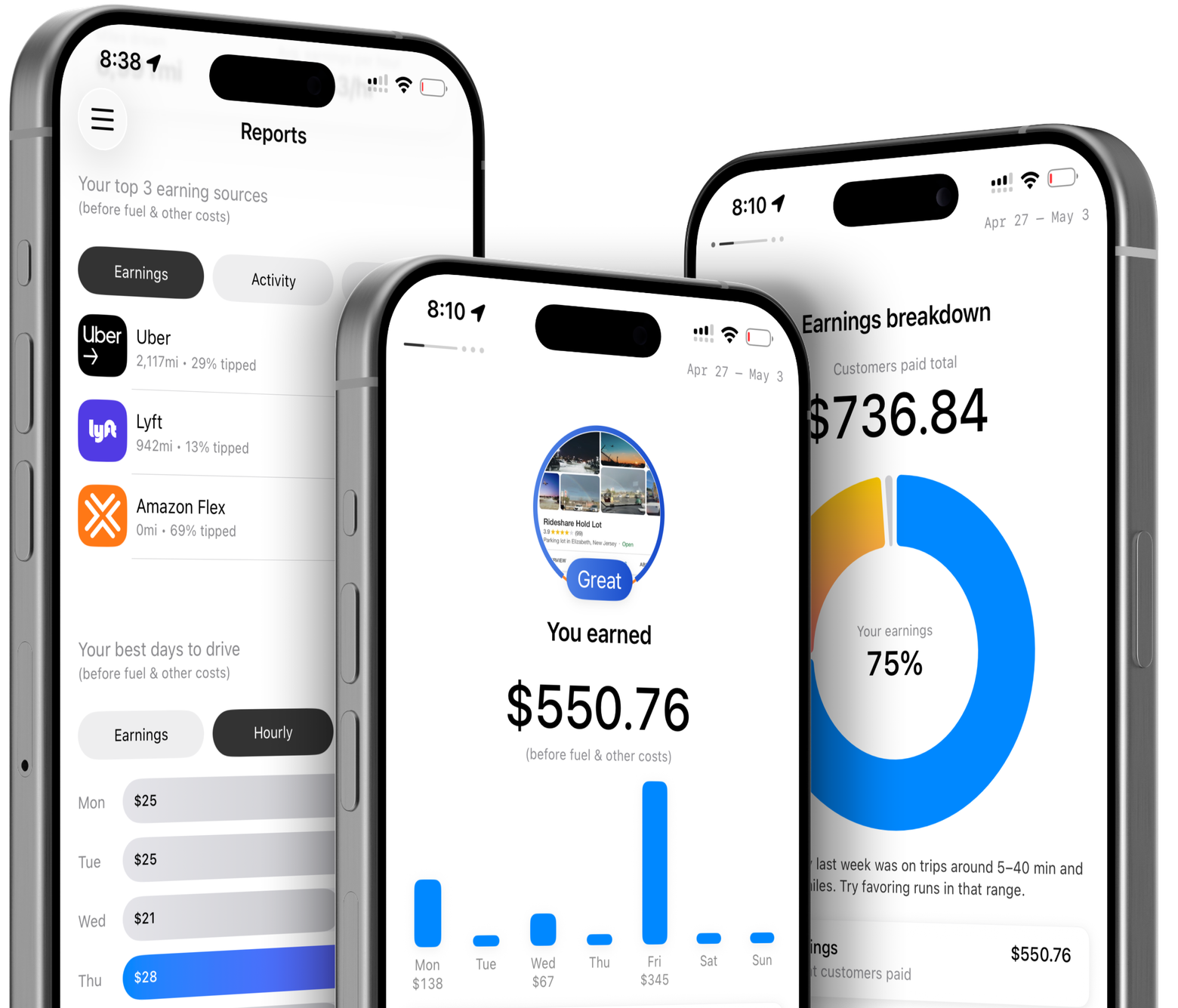
Where GigReal fits: Trip Identifier prices a surge offer on realistic minutes, not the multiplier, so a let-out trip that fails your hourly floor shows as the MAYBE it is before you accept — and your dashboard shows, by shift, whether game nights are actually beating your Thursdays.
Verdict figures from the GigReal August 2026 Earnings Index; methodology on the Index report. Venue rules, road closures, and designated rideshare zones vary by stadium — check your city's game-day traffic plan.