Multi-apping 101: run two apps without wrecking your hourly
In July, 44% of trip offers paid under $1 a mile and only 14% cleared drivers' own floors (July Index). When good offers thin out, the losing move is lowering your standards to stay busy. The winning move is seeing more offers per hour — and that's all multi-apping is: widening the funnel so your floor has more to filter.
Why it works: the denominator
Real hourly divides your net by every hour online — including the minutes you sit between offers (the gross-vs-net math). Those dead minutes are pure dilution. A second app doesn't raise what any one trip pays; it shrinks the empty space between trips. Same floors, fewer wasted minutes, better denominator.
The five rules
One active job at a time. Accept on one app, pause or go offline on the rest. Running two active jobs at once is how food shows up cold, ratings tank, and accounts get deactivated — the downside is bigger than any single trip's upside.
Same floors everywhere. Your per-mile minimum is about your car's costs, not the platform's logo. If $1.10 is your floor on Uber, it's your floor on DoorDash too (how to set it).
Pair complementary demand. Rideshare peaks at commutes and nights; food delivery peaks at lunch and dinner. A pairing that covers each other's dead zones beats two apps fighting over the same hour.
Know what acceptance rate costs you. Letting offers expire on a second app can drag down tier programs tied to acceptance. Decide which platform's perks you actually use, and protect that one — the other exists to fill gaps.
Judge the combination, not each app. A platform that looks mediocre on its own can be the perfect gap-filler. The number that matters is combined real hourly across everything — and it only exists if you track everything in one place.
What the data says about platform choice
June's real-hourly medians ran Uber $22.10, Lyft $20.80, Walmart Spark $18.90, DoorDash $17.60 (June Index). The spread is real — but the multi-apper's edge isn't picking the winner. It's the recovered minutes: a $17.60-an-hour platform filling a dead half-hour pays infinitely more than the $22.10 platform you're waiting on.
Rule of thumb: if you're regularly sitting more than 15 minutes between trips, a second app will likely add more to your week than squeezing anything else out of the first one.
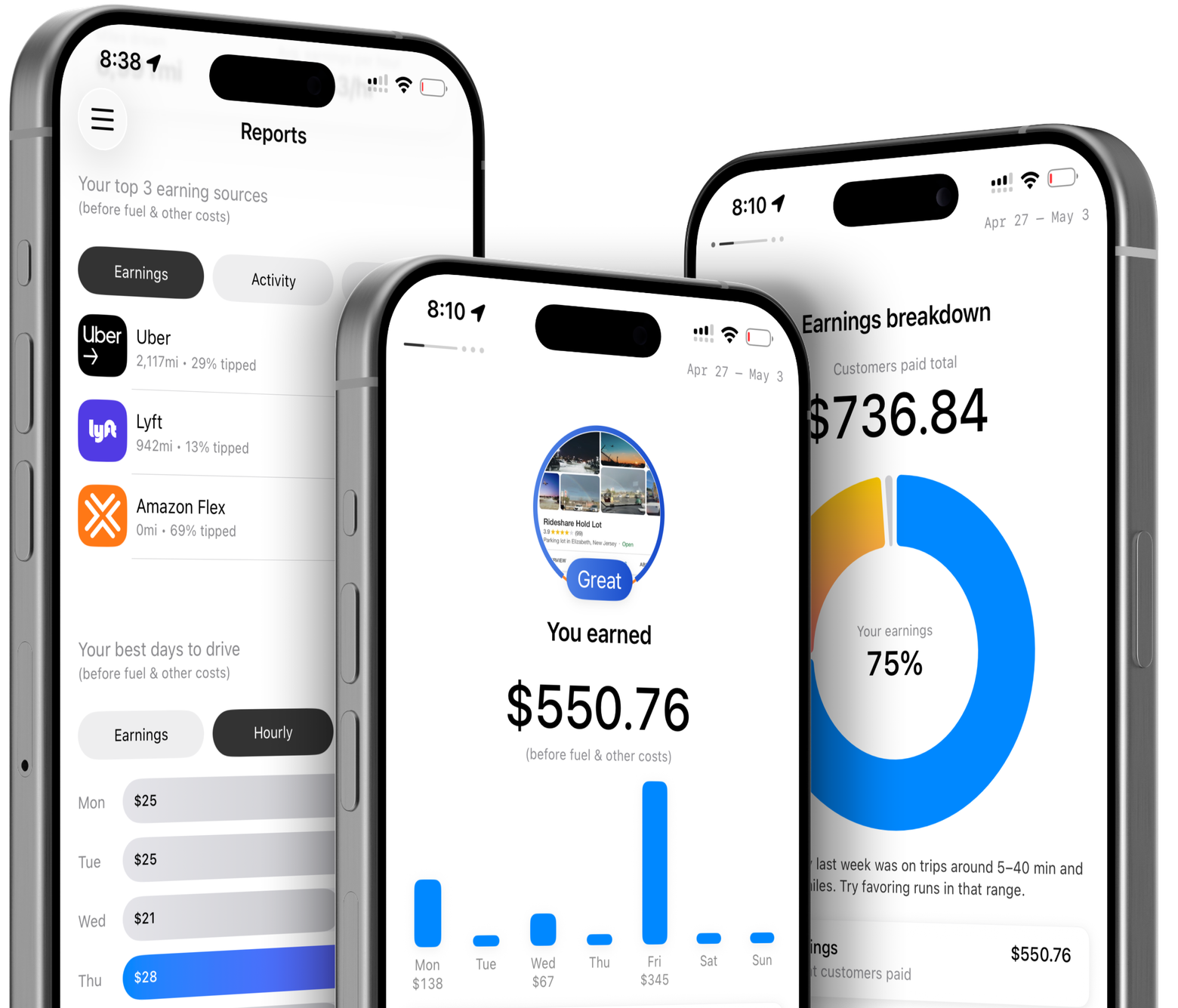
Where GigReal fits: AutoSync pulls trips from each platform automatically, your earnings, mileage, and expenses land in one dashboard, and Trip Identifier applies your floors to any offer — whichever app it came from. The combined real hourly is just there.
Figures from the GigReal June and July 2026 Earnings Index — aggregated and anonymized across US drivers; methodology on the Index reports.