The new tips deduction and 1099 changes, explained for gig drivers
Two changes from the 2025 federal tax law are now fully in effect, and both land squarely on gig drivers: a deduction that can shelter up to $25,000 of tip income from federal income tax, and new 1099 thresholds that mean many drivers will stop receiving forms they used to count on. Here's what changed, what didn't, and what to do with the rest of 2026.
The tips deduction, in plain terms
For tax years 2025 through 2028, workers in listed tipped occupations can deduct up to $25,000 of qualified tips from their federal taxable income. The final IRS rules published in spring 2026 settled the question that mattered most here: rideshare drivers and app-based delivery drivers are explicitly on the qualifying list.
The fine print that decides whether your tips qualify:
- Voluntary tips only. In-app tips and cash tips count. Base pay, peak-pay bonuses, quests, and platform incentives do not — and neither do mandatory service charges.
- Independent contractors qualify. No W-2 needed — self-employed drivers claim it on their own return, and it works whether or not you itemize.
- It can't exceed your net profit. The deduction is capped at your net income from the driving work that produced the tips — earnings after mileage and expenses.
- It phases out at higher incomes, starting above $150,000 ($300,000 for joint filers).
And the two things that don't change: tips still count for self-employment tax — Social Security and Medicare's 15.3% applies as usual — and your state may still tax them. This is a federal income tax deduction, not a magic wand.
What to do with five months left in 2026
Track tips separately from base pay. The deduction rides entirely on knowing your tip total for the year. Platform statements break tips out — make sure your own records do too.
Check whether you claimed it for 2025. The deduction already applied to 2025 income. If you filed in April without it and had meaningful tips, it's worth asking a tax professional whether an amended return makes sense.
Expect clearer forms next year. Starting with tax year 2026, W-2s and 1099s are being updated to report qualified tips and your occupation code separately, which should make claiming far more mechanical.
Fewer 1099s are coming — that's not a tax cut
The same law rewrote the reporting thresholds. Form 1099-K is permanently back at more than $20,000 and more than 200 transactions — reversing the $600 rule that was scheduled to phase in. And the 1099-NEC/MISC threshold rises from $600 to $2,000 for payments made in 2026, with the first affected forms arriving in early 2027.
What that means practically: part-time drivers, referral bonuses, small side income — a lot of money will now arrive with no form attached. The IRS is explicit that all of it remains taxable. No 1099 doesn't mean no taxes; it means the recordkeeping is now fully on you.
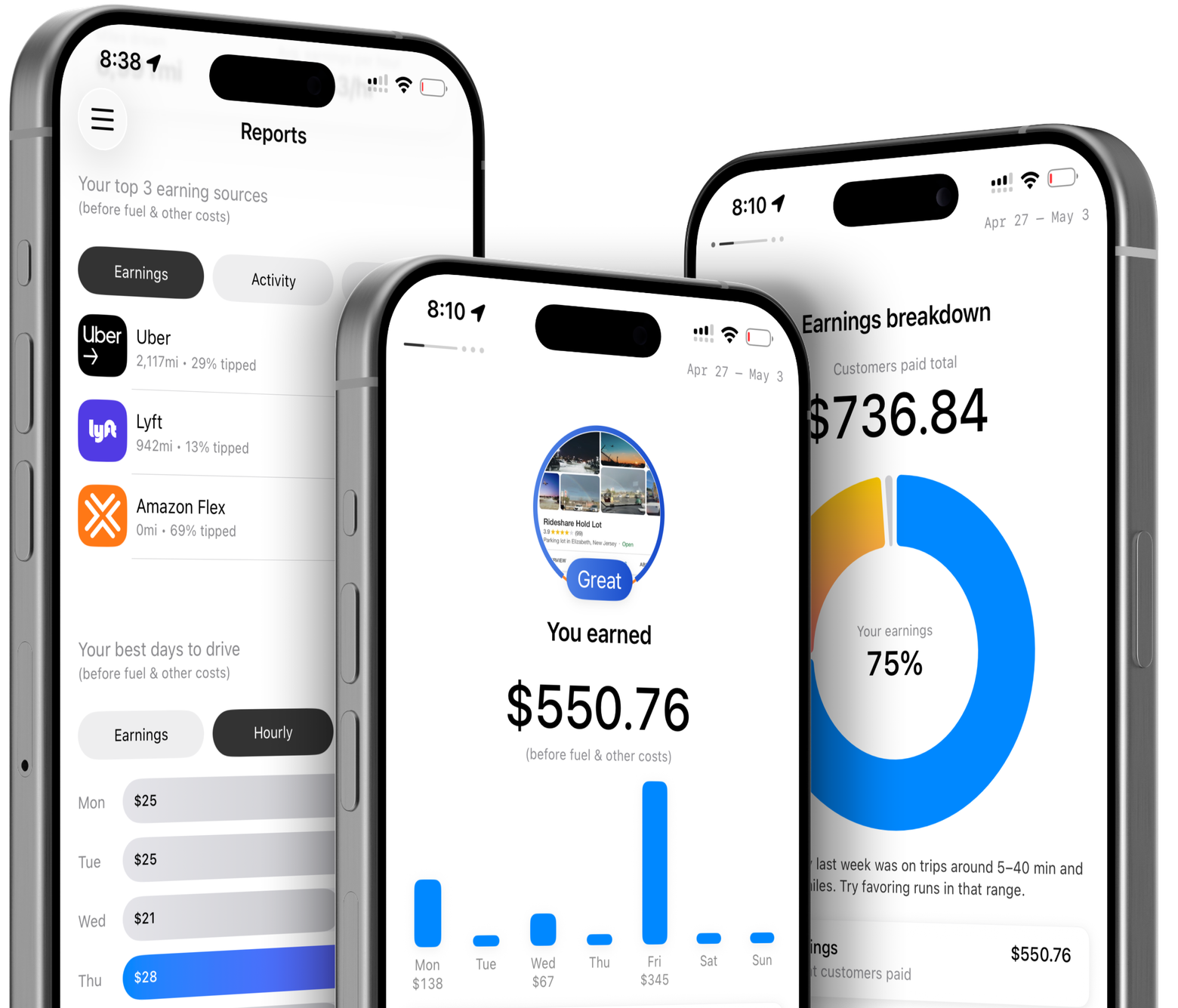
Where GigReal fits: your earnings, tips, mileage, and expenses are tracked all year regardless of which forms show up in January — and the tax report export gives you the totals both the deduction and your Schedule C depend on.
General information, not tax advice. The tips deduction has edge cases — occupation classification, multiple jobs, state conformity — and rules can change. Confirm your situation with a tax professional or IRS.gov.