The September snapback: five moves to make before Labor Day
July was the bottom: the median offer slipped to $1.09 per mile and 44% of offers priced under a dollar (July Index). If the summer slowdown was about defense, the next two weeks are about position. September demand doesn't drift back — it reloads almost overnight, and the drivers who get the rebound aren't the ones who react to it. They're the ones already parked where it lands.
What reloads in September
Summer squeezed from both sides — demand thinned while supply thickened. Fall reverses both at once:
- School runs and commutes return. The weekday backbone that vanished in July — morning commutes, school drop-offs, office lunches — comes back in the first two weeks of September, and it comes back fast.
- College towns refill. Campus markets get their densest riders and late-night orderers back — and move-in weekends are demand events in their own right: airport runs, parent hotels, and a thousand trips to the store.
- Seasonal drivers log off. The summer-break supply that diluted every queue heads back to class too. Fewer drivers chasing more offers is the whole rebound in one sentence.
- Leisure doesn't quit yet. Airports, beach markets, and event nights stay strong through Labor Day — so for about two weeks, both demand patterns run at once.
Three dates to circle
Five moves to make this week
Re-test the weekday blocks you dropped. If July taught you to skip Tuesday mornings, September un-teaches it — commute demand comes back before anything else. Give the old blocks a two-week audition and let the numbers decide, not the memory of a slow July.
Work the move-in weekends. Near a campus? The next two Saturdays are airport queues, hotel runs, and parents on surge — fall demand arriving early, while summer's extra driver supply is already thinning.
Ride the overlap through Labor Day. Don't rotate away from leisure yet. Beach towns, airports, and holiday-weekend nights pay through September 7 — the switch to weekday blocks happens after the holiday, not before it.
Keep your floor exactly where it is. A better mix means more offers clear your bar — it doesn't move the bar. July's lesson was that offers above the floor were still paying June rates (July Index); September just sends more of them. The snapback pays volume at your standards, not lowered standards at volume.
Let your dashboard call the turn. Every market flips on its own week — a college town in late August, a commuter suburb after Labor Day. When your weekday real hourly starts beating your weekend nights (the day-of-week data), fall has arrived in your city. Move your blocks that week, whatever the calendar says.
One more date while you're planning: the Q3 estimated payment lands September 15 — right as the rebound's first fuller weeks pay out. Set the money aside on the way up and the deadline becomes a non-event.
Rule of thumb: the snapback is a window, not a date. When Tuesday starts out-earning Saturday on your dashboard, your market has flipped — move your blocks that week.
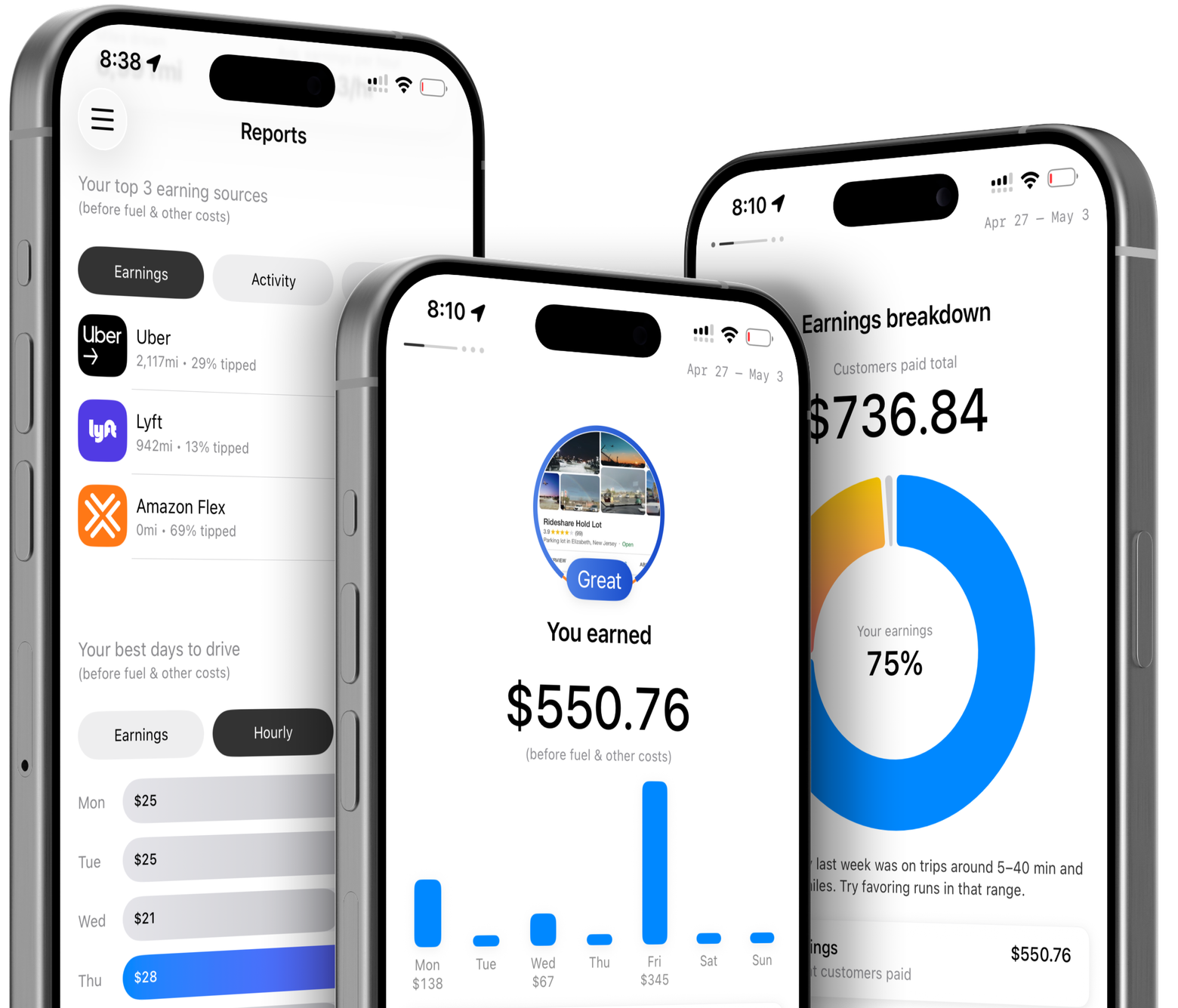
Where GigReal fits: your real hourly by day and shift is already on the dashboard, so the flip shows up the week it happens — and Trip Identifier holds your floors against September's richer mix automatically, whichever app the offer comes from.
Figures from the GigReal June and July 2026 Earnings Index — aggregated and anonymized across US drivers; methodology on the Index reports. School and campus timing varies by market.