Beyond mileage: six deductions gig drivers leave on the table
The mileage deduction gets the headlines — at $0.76 per mile since July 1, it should. But mileage only covers the car. The rest of your business has costs too, and every one you capture shrinks the net profit your September 15 payment is computed on. Here's what drivers most often leave on the table.
Six deductions that stack on top of mileage
Your phone and plan. The business-use share of the device and the monthly bill — it's the tool you run every trip on. Estimate the percentage honestly and keep it consistent, and it holds up.
Gear and supplies. Hot bags, phone mounts, chargers, dash cams, cleaning supplies for the work — ordinary and necessary equipment for the job is deductible.
Tolls and parking. Separately deductible even if you take standard mileage — they're not bundled into the per-mile rate. Parking tickets aren't; fines never are.
Platform fees. If your tax forms report gross earnings before the platform's cut, those fees are a business expense — don't pay tax on money you never kept.
Self-employed health insurance. If you buy your own coverage and aren't eligible for a plan through an employer or a spouse's, premiums can be an above-the-line deduction — often the biggest non-vehicle number on a driver's return.
The automatic two. Half your 15.3% self-employment tax is deductible, and most gig drivers qualify for the 20% qualified business income deduction. Software or a pro applies both — but only against income and expenses you actually tracked.
Two rules that keep it clean
No double-dipping the car. Standard mileage already includes gas, repairs, insurance, and depreciation — vehicle costs stay out unless you switch methods entirely (how the two methods work).
Contemporaneous beats reconstructed. A receipt captured the day it happened survives scrutiny; a March reconstruction from bank statements is where deductions go to die. With the 25–30% set-aside running on net profit, every expense logged this month lowers the September 15 payment directly.
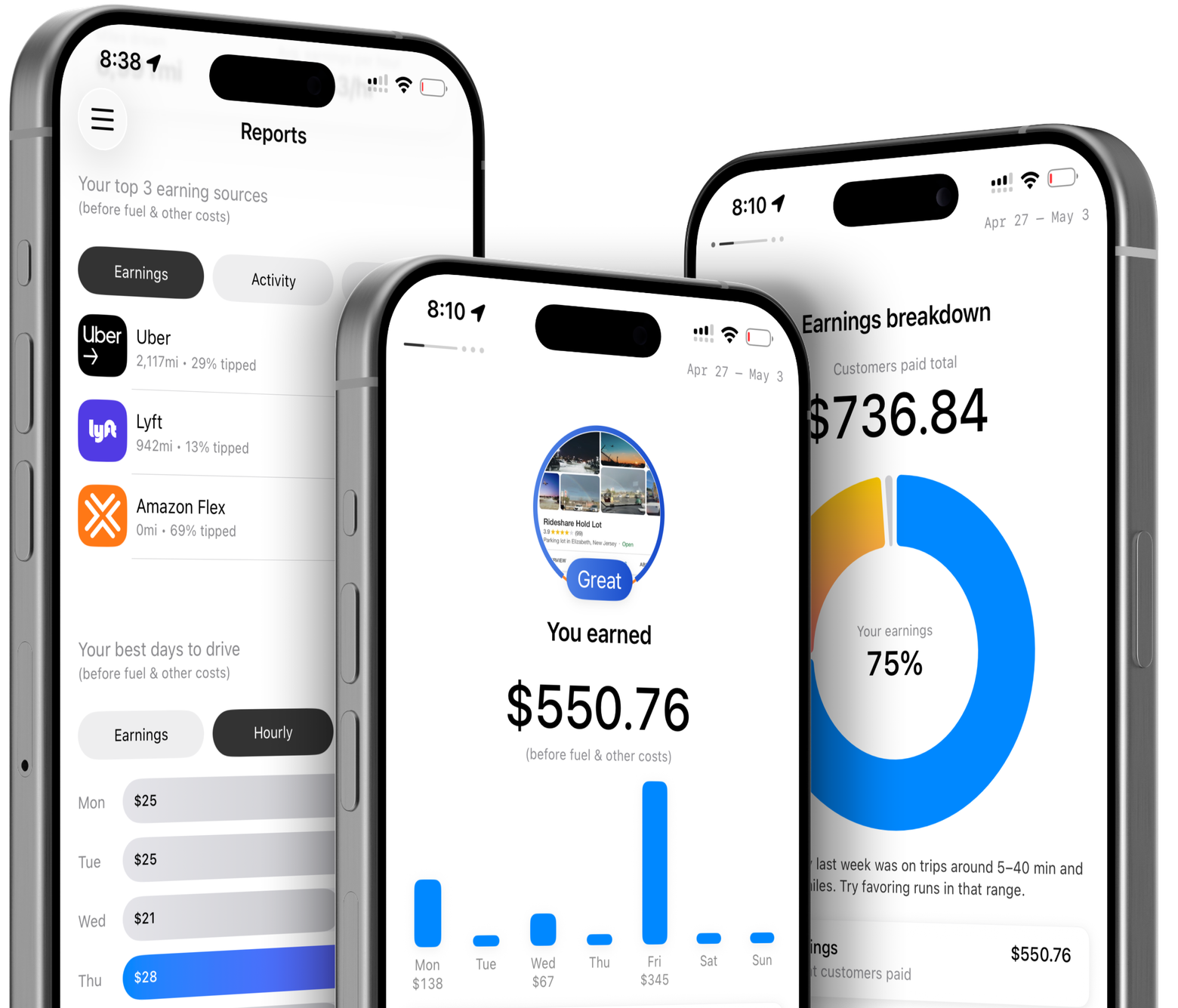
Where GigReal fits: snap the receipt when it happens — expenses land in the same report as earnings and mileage, so the net-profit number your quarterly payment needs is always current.
General information, not tax advice. Business-use percentages, health-insurance eligibility, and the QBI deduction all have fine print, and state rules differ — confirm your situation with a tax professional or IRS.gov.